
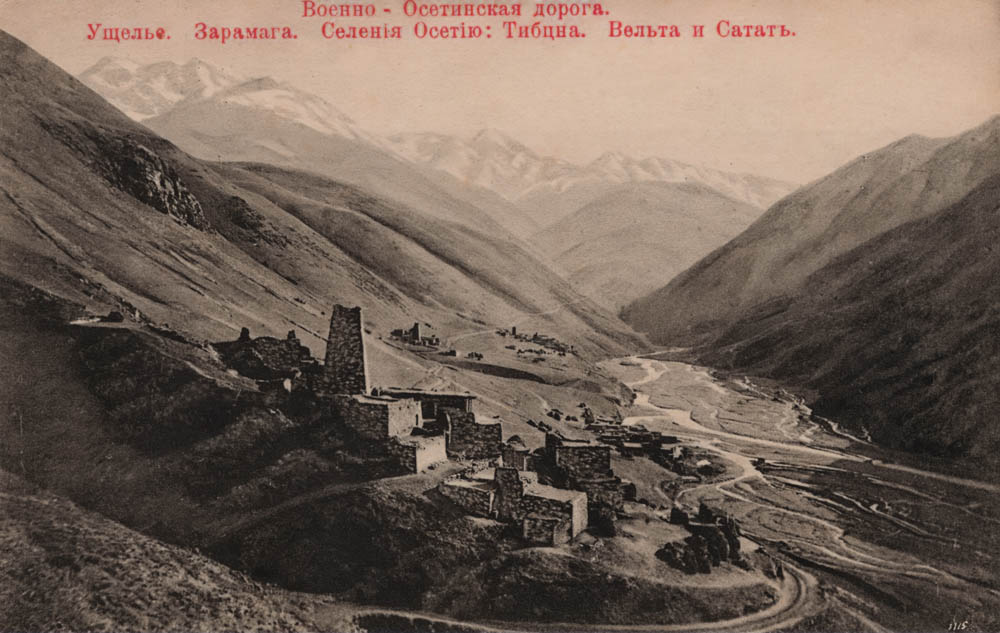
The Zaramag Gorge is situated at an elevation of approximately 1,700–1,800 meters above sea level, between the Main Watershed Range and the Lateral Range of the Greater Caucasus.
The gorge is a narrow valley through which the Ardon River flows.
This region has been inhabited since ancient times.
By the end of the Bronze Age, in the second millennium BC, archaeological evidence shows that Zaramag had a high population density and that all land suitable for economic activity had been fully developed, including cultivated terraces on the nearby slopes and pastures adjoining the valley.
At the end of the XX century, a significant number of archaeological sites were discovered in the Zaramag Gorge, including a flat grave cemetery dating from the 1st century BC to the 1st century AD, as well as the more ancient Adaion burial ground, associated with the Early Koban culture (XII–VI centuries BC).
Excavations of the earlier burial site uncovered unique collections of jewelry, household utensils and bronze weapons.
Among the later architectural monuments that have survived are the Tsemi fortified settlement (Early Middle Ages) and the medieval outpost of Zylin Duar (“Crooked Gates”).
In the village of Tib, six residential towers and five defensive towers that once belonged to the Kuchiev family have been preserved.
These structures were probably built in the XVI–XVII centuries (according to oral tradition, the Kuchievs settled in this village in the XVI century).