
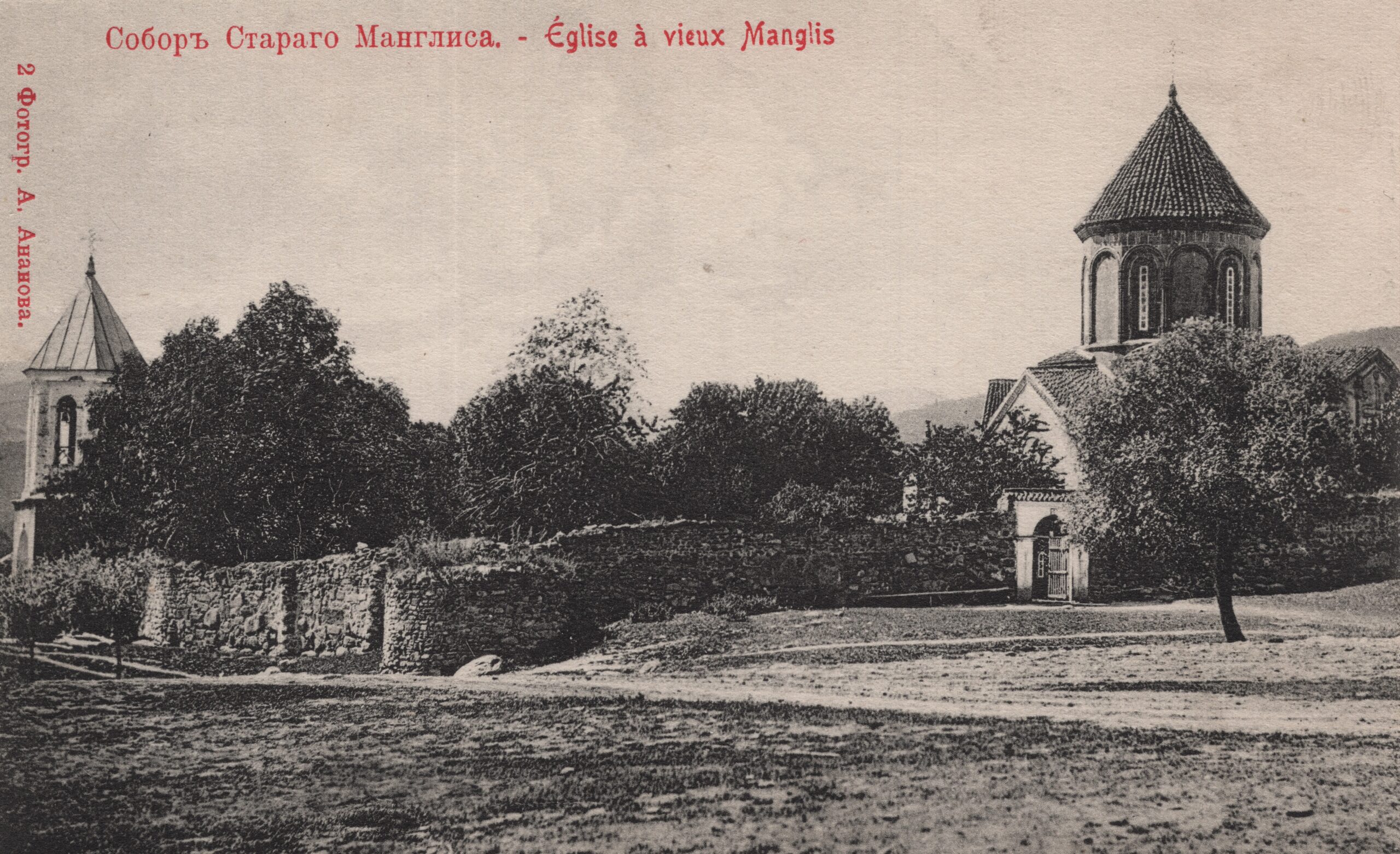
According to the Georgian chronicles, the cathedral in Manglisi was founded in 326.
Around the same time, by order of the Roman Emperor Constantine the Great (272–337), sacred relics were sent to Georgia to strengthen the new faith (Christianity had been legalized as a “lawful” religion in the Roman Empire in 313).
One of these relics — a fragment of the True Cross of the Lord — was placed in Manglisi and remained preserved in the church until the 620s, making the cathedral one of the earliest pilgrimage centers in the Caucasus.
The original church was built in the form of a tetraconch — a centralized structure with four apses arranged in a cross-shaped layout.
This architectural style was typical of the early Christian world.
After the Arab conquest of Tbilisi in 736, the cathedral gradually fell into decline, and by the X century the building was in need of major restoration.
As a result, during the period of the rise of the unified Georgian kingdom, the church underwent a radical reconstruction.
The rebuilding is associated with the reign of King George I (996–1027), and especially Bagrat IV (1018–1072).
At that time, the dome was replaced, the facade was decorated, and the interior was adorned with frescoes — shaping the cathedral in the form largely preserved to the present day.