
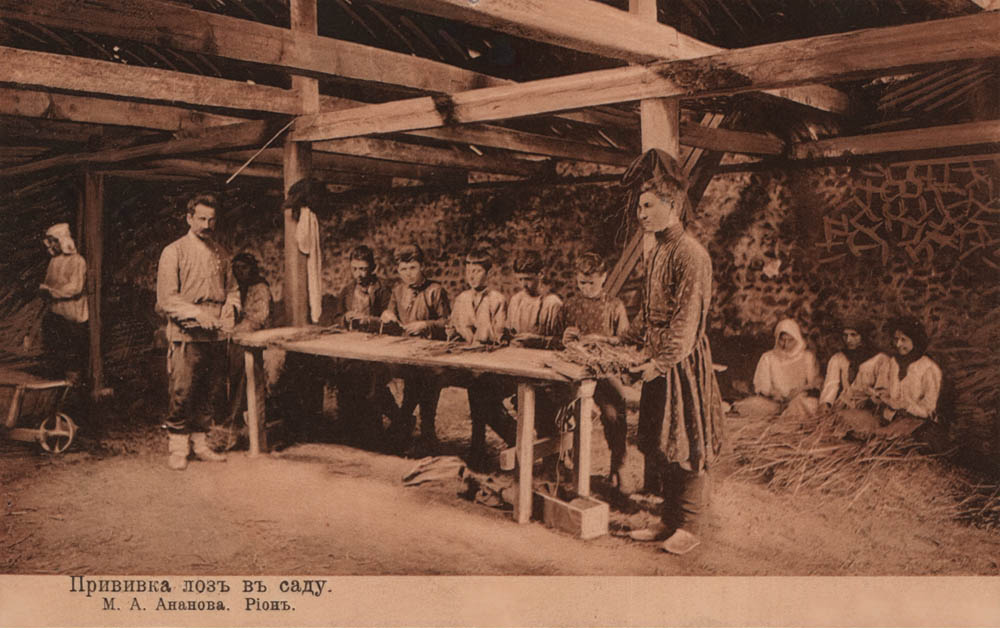
Grafting grapevines is a key agronomic technique that consists in joining a part of a cultivated plant, called the scion, with the root system of another variety—the rootstock.
The main purpose of this operation is to combine the best qualities of both plants: the scion is chosen for its high productivity and excellent berry flavor, while the rootstock serves as the foundation responsible for resistance to external factors.
The need for the widespread use of this method arose in XIX century, when European viticulture faced a catastrophic threat in the form of phylloxera—a pest introduced from America.
The only salvation for the European vines was grafting them onto American roots, which possess natural immunity to this insect.
In addition to protection against pests, grafting greatly expands cultivation possibilities: it allows grapevines to adapt to poor soils and to withstand severe frosts more easily thanks to the powerful and resilient root system of the rootstock.
From the standpoint of productivity, this technique promotes earlier entry of the vine into the fruiting period, helps stabilize yields, and noticeably improves the quality and size of grape clusters.
For grape growers, grafting is also an effective farm-management tool, as it makes it possible to quickly change a variety on an already established vine, which is far simpler and more cost-effective than completely uprooting old plantings.
Finally, this method is indispensable for the propagation and preservation of the unique characteristics of rare varieties, ensuring their longevity and continued success.