
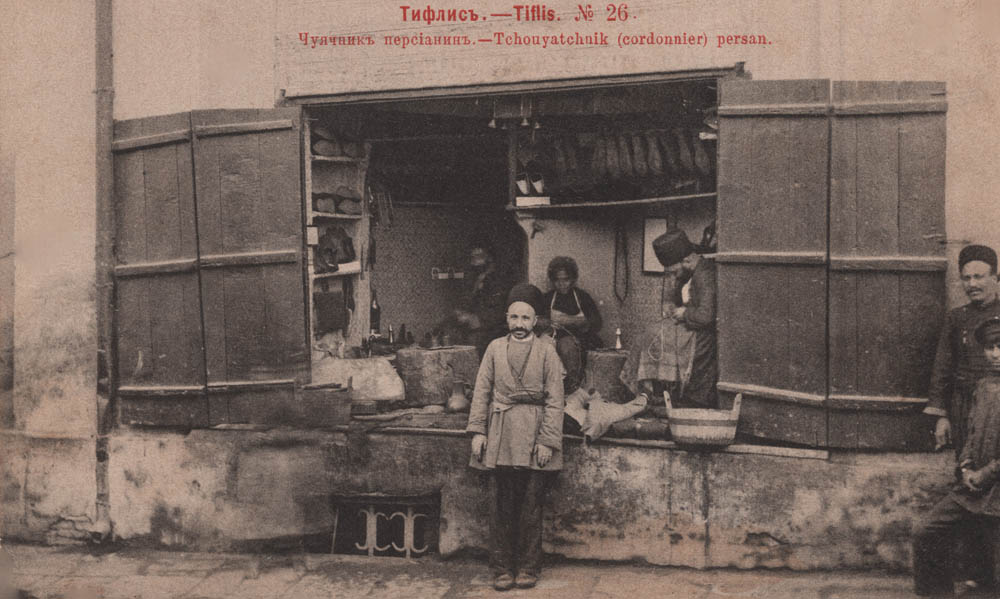
A “chuvyachnik” is an obsolete term for a cobbler who makes chuvyaki.
Chuvyaki (or chevyaki) are a traditional soft leather footwear that was common in the Caucasus, Persia (Iran), Transcaucasia, and parts of Central Asia from the XVIII to the early XX century.
The word itself has Caucasian roots, originating from the Adyghe word tsuake (“footwear”).
Chuvyaki were soft leather shoes with a thin leather sole.
Often, they were laceless; this type of footwear was simply slipped onto the foot.
They were worn by artisans, merchants, city dwellers, and occasionally by rural residents.
Chuvyaki were typically crafted from goat or calf leather.
The process involved several manual steps.
The master would first cut out the individual components of the shoe.
Next, the parts were sewn together, usually using leather threads.
After that, the sole was then stitched on by hand.
Occasionally, the shoes were dyed or rubbed with fat to soften the leather and provide protection against moisture.
Usually, chuvyaki were worn over thin socks or with woolen stockings.
At the beginning of the XX century, this type of footwear was displaced by factory-made boots, European shoes, and military footwear.
As a result, the profession of the chuvyachnik gradually faded away.