
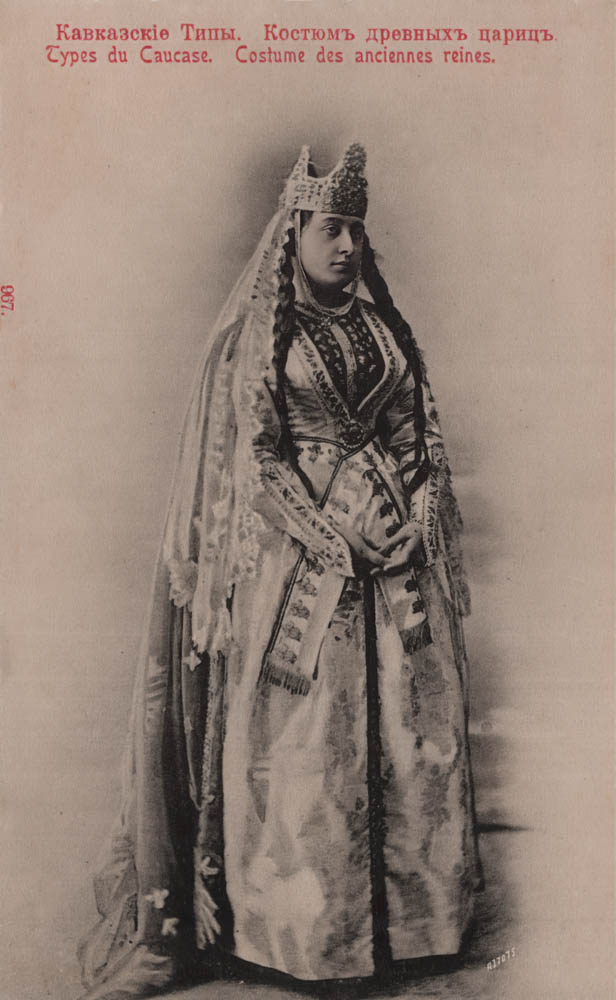
This postcard features a magnificent example of a Georgian national costume, stylized to resemble the ceremonial attire of the Caucasian aristocracy.
One of the most striking and instantly recognizable elements of the ensemble is the chikhti-kopi — a traditional women’s headdress.
The chikhti is a rigid headband, typically covered in velvet and embellished with pearls, embroidery, or gold thread.
The kopi is a soft roll of cotton or silk padding that helped maintain the volume and shape of the headdress.
Draped over it is a lechaki — a delicate white veil cascading down over the shoulders and back, lending the image an air of majesty and noble restraint while reflecting traditional ideals of feminine modesty and dignity.
The outer dress is tailored in the characteristic style of a Georgian court gown: the bodice fits the figure closely, creating a tall, dignified, and stately silhouette.
The long sleeves feature a classic slit — in the Middle Ages, such dresses were worn over an undergarment known as a pernagi (a lightweight shirt that would have been visible through the sleeve openings).
The fabric appears to be heavy silk, satin, or brocade, adorned with ornamental patterns — materials traditionally used for aristocratic ceremonial clothing.
Particular attention is drawn to the long textile belt, hanging almost to the floor and decorated with embroidery and fringe.
In Georgian culture, the belt symbolized honor and elevated status, and in formal attire it could be further embellished with gold thread, precious stones, or metal pendants.
The photograph was taken at the end of the XIX century — a period when it became fashionable among the Georgian nobility to pose in historically reconstructed costumes.
These outfits were not intended for everyday wear but served as symbolic statements, emphasizing national identity and a spiritual connection to Georgia’s Golden Age — the era marking the height of Georgian statehood and cultural achievement.